Midsummer – a celebration of life, love and magic

Midsummer is an ancient Nordic tradition that is still very much alive today, particularly in Sweden. Throughout history, there has been a perception that this time of year holds a special kind of magic, that the veil to the supraphysical world is thinner than at other times of the year. Over the years, this special day has been celebrated in a variety of innovative ways.

Published June 20, 2025 – By Editorial staff

Midsummer marks the definitive arrival of summer. It means exactly what it sounds like, “in the middle of summer,” and the word already existed in Old Swedish as miþsumar. The holiday is celebrated in connection with the summer solstice, which is the time of year when the sun is at its highest point in the northern hemisphere. Midsummer Eve is always celebrated on a Friday.


This article was first published on June 21, 2024.


In northern Europe, midsummer has long been celebrated in conjunction with the Christian holiday of John the Baptist, which is also the reason why Saturday has become a public holiday. In Finland this holiday is primarily called Juhannus, in reference to John the Baptist. Denmark and Norway also celebrate John the Baptist's evening by lighting bonfires and playing games. John the Baptist's Day is also celebrated to some extent in Germany, but generally the summer solstice celebrations in the rest of Europe are fairly limited.

Ancient roots

It is not clear for how long Midsummer has been celebrated, as it seems to date back to prehistoric times, but it is definitely known that it has been celebrated in the Nordic countries at least since the Middle Ages.

However, very little is known about how Midsummer was celebrated in the Middle Ages. There are hints that the celebration was related to fertility and some older sources that show that there was ritual beer drinking and also blot – ritual animal sacrifice – during the Viking Age.
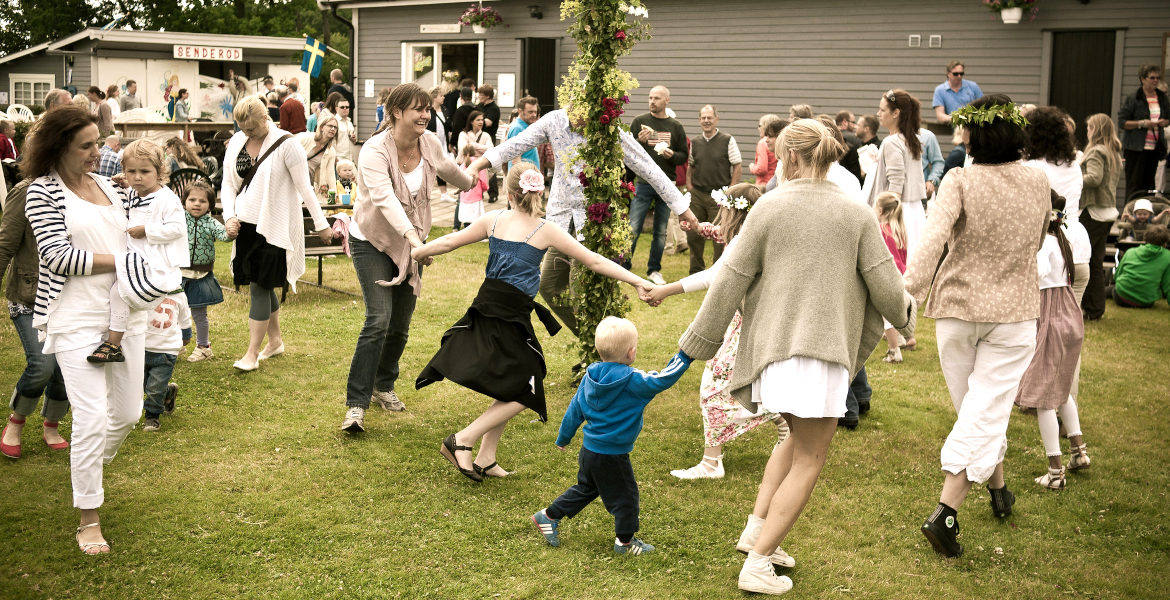
Photo: Håkan Dahlström/CC BY 2.0

Summer cleaning and little frogs

From around the middle of the 19th century, there is more clear evidence of how the celebrations were carried out in Sweden.. One important step was to clean the entire house, then dress the house both inside and outside with flowers and leaves from birch trees, among other things. The festive locations were also decorated with leaves, as were the wagons in which people traveled. Outside the house, leaf bushes were placed, which the farmers could also sell to the townspeople.

The midsummer pole has its origins in the May Day celebrations when a so-called maypole is erected in Germany and other parts of the world. The tradition probably came from Germany to Sweden in the Middle Ages, but since the Nordic countries rarely have time to start greening during May, this tradition was moved to the Midsummer celebrations. There is a widespread belief that the midsummer pole is dedicated to fertility and thus may represent some kind of phallic symbol, although there is no confirmation of this from known historical sources.

The midsummer pole has had different designs over the years, but during the 20th century the appearance was standardized and the midsummer poles became increasingly similar all over the country. Dancing around the midsummer pole has probably existed since at least the 19th century, says Jonas Engman, curator at the Nordic Museum.

But the dance with songs took off in the 1920s. This era saw the publication of songbooks with melodies and lyrics associated with holiday celebrations.

Perhaps the most classic Swedish midsummer song – Små grodorna (the little frogs) – has been traced to a military march from the French Revolution called La Chanson de l'Oignon, or The Onion Song. This song was turned into a taunt by English soldiers, replacing the word camarade (comrade) with grenouille  (frog). It is unclear when or how the song came to Sweden, but it is known that it has existed for a long time at Nääs Castle in Västergötland in connection with courses in handicrafts and games, where The little frogs was a game taught there and printed in the singing games book Sånglekar från Nääs in 1922. The singing of The little frogs is typically associated with jumping around the midsummer pole in a frog-like manner.

Food

What people used to eat around Midsummer depended on where they were in the country. Different types of fish, but also pork and other meat have all been part of the feast in different places. White porridge, that is, porridge cooked with milk and often also with wheat flour, is a dish that was common as a festive meal in various places. A Swedish filbunke, or viili in Finnish, is a fermented milk dish similar to yogurt or kefir which also used to be a common feature of the midsummer feast.

In modern times, herring and new potatoes constitute the core of the menu, along with the classic strawberries. Spirits of various kinds are just as essential – together with a good snapsvisa, of course! A snapsvisa is a traditional Scandinavian drinking song, often with comical lyrics.
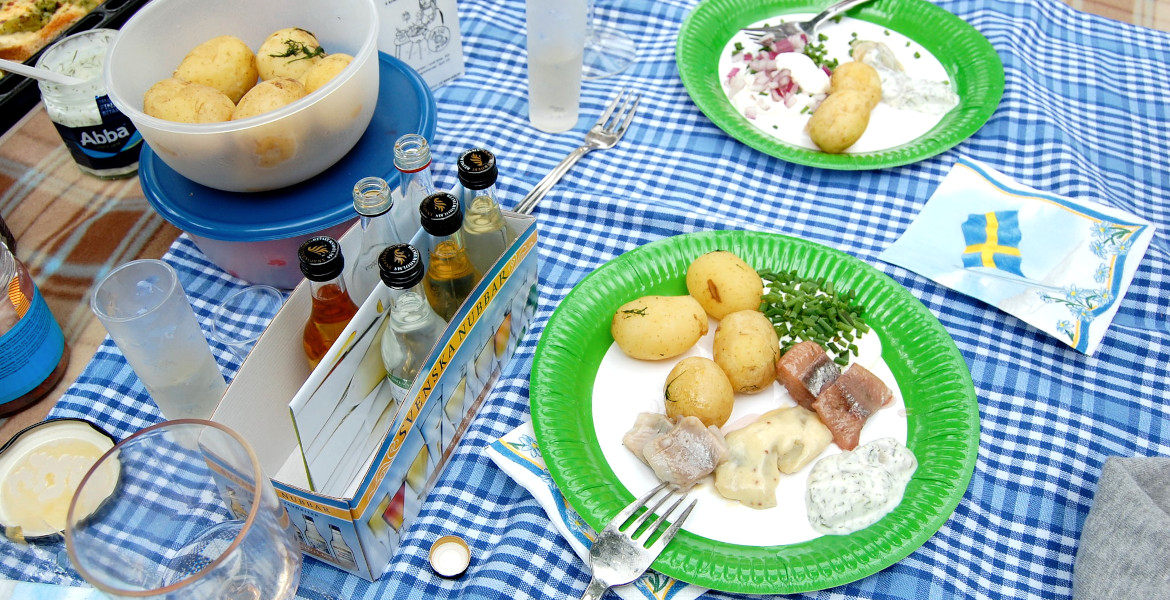
Photo: Magnus D/CC BY 2.0

Midsummer magic

It has long been thought that the boundaries to the supraphysical reality were thinner during Midsummer. Everything that grew was considered to be charged with magical powers, especially during this time. It was therefore common, for example, to tie a wreath during Midsummer and save it. For the same reason, there was also a belief that one could regain energy during the winter by placing a dried midsummer wreath in the annual Christmas bath.

Midsummer dew, in particular, was considered to have special powers and it was not uncommon to roll around naked in it, or to collect the dew in sheets, for example, because it was thought to improve health. Drinking from springs was also common during Midsummer, which was considered beneficial to the body and mind. However, all activities involving any kind of magical aspects would be done in silence, so as not to break their mystical effect.

Keeping silent at certain special places could also bring visions of the future. For example, it was common to walk the so-called årsgång (year walk), which could involve walking counter-clockwise around a church or other holy place on an empty stomach.

– If the 'yearwalker' completed the entire ritual, on the way home he would experience sights or sounds that told him about events in the coming year, says Tora Wall, folklorist at the Nordic Museum.

Night of love

Midsummer has long been associated primarily with love. Many young women in Sweden still pick their seven or nine flowers and put them under their pillow to find out who they are going to marry.

"The Midsummer night is not long but sets seven and seventy cradles in motion" is an old Swedish rhyme.

Another way to predict one's future partner was to eat a dream porridge made of flour, water and a lot of salt. The person who came later in the dream and gave you a drink to quench your thirst was your future partner. The type of drink could also give a hint as to whether you would have a richer or poorer life together.

Young people often arranged mock weddings and could choose a midsummer bride and groom, often each with their own floral wreath. It was also not uncommon for girls to tie wreaths to the boys to show that they were a couple.

A de facto national day in Sweden

In Sweden, the National Day celebration on June 6, commemorating the coronation of Gustav Vasa in 1523, has traditionally not been as big a holiday as National Day is in many other countries. One of several explanations for this, in addition to the long period of peace in Sweden, is probably that the nearby Midsummer celebration has de facto been the really big and obvious holiday alongside the more quiet Christmas.

That said, we would like to wish all readers a glad midsommar!
TNT is truly independent!

We don’t have a billionaire owner, and our unique reader-funded model keeps us free from political or corporate influence. This means we can fearlessly report the facts and shine a light on the misdeeds of those in power.

Consider a donation to keep our independent journalism running…

Gävlebocken – the burning Christmas symbol

Published yesterday 10:55 am – By Editorial staff
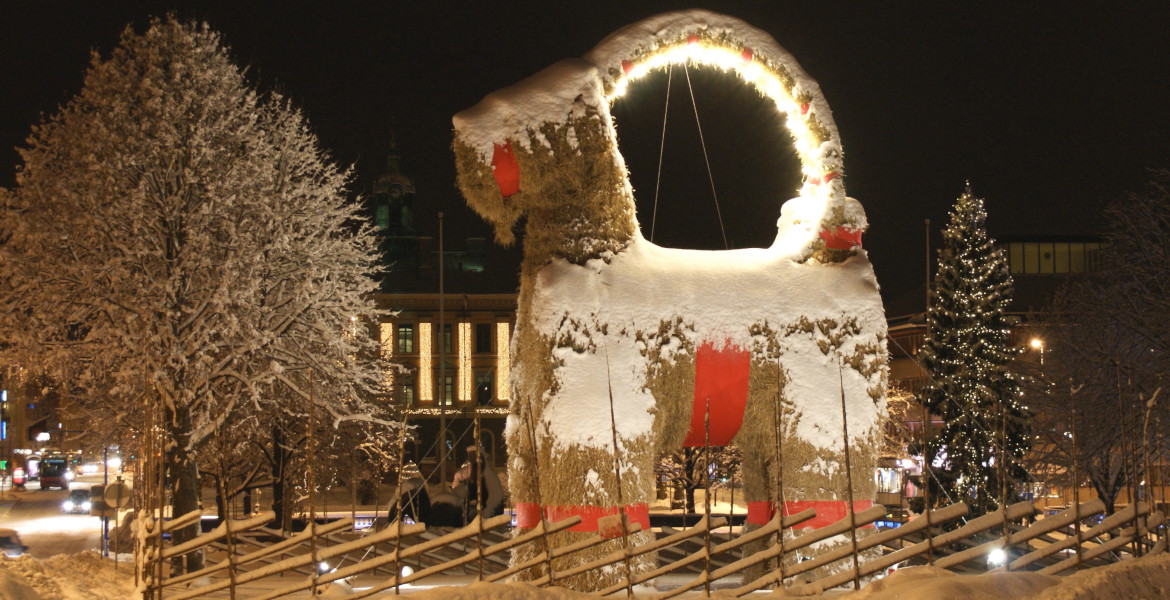
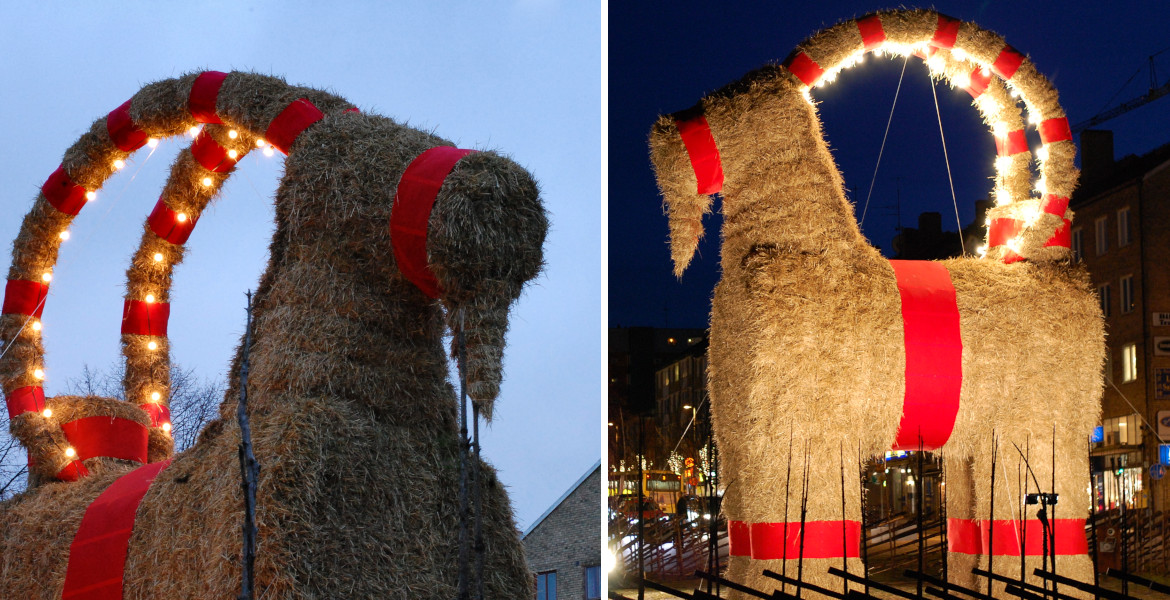
The 2019 edition of the Gävle Goat.

It stands nearly thirteen meters tall, weighs several tons and is built from straw. Every first Sunday of Advent, residents of Gävle gather to inaugurate the city's famous Christmas goat. But the Gävle Goat (Gävlebocken) is also known for its recurring fate: it has an unfortunate tendency to go up in flames.

Today, the first Sunday of Advent, marks the inauguration of the 59th edition of the Gävle Goat.

The very first Gävle Goat was erected on December 1, 1966, at Slottstorget in the southern part of Gävle, a city in central Sweden. It was then 10 meters tall and weighed three tons.

It's unclear exactly whose idea it was to create a giant straw goat, but according to legend, it was merchants who wanted to attract people to the shops in the southern part of the city during Christmas.

Advertising man Stig Gavlén and Harry Ström, a TV dealer and chairman of the merchants' association, are pointed out as possible originators of the Gävle Goat.

Inga Ivarsson from Hälsingland, whose family owned Edsbyverken which had previously lent the world's largest skis and the world's largest chair to the merchants in the south, is also identified as a possible goat pioneer according to Visit Gävle.

The idea was that the Gävle Goat would be a continuation of the theme "the world's largest straw goat".

The Gävle Goat in 2009. Photo: Seppo Laine/CC BY 2.0

The tradition begins...

The very first goat actually burned down as well, something that would prove to be a recurring traditional fate. Already on New Year's Eve it burned down, and the perpetrator was charged with aggravated vandalism.

Despite this, a new goat was erected the following year, and already here it became slightly larger – approximately 12 meters tall, 6.5 meters long and with three-meter-high legs.

For two years the goat was left untouched, but in 1969 it burned again on New Year's Eve – this time the perpetrator was never caught. In 1970 it burned already the night after inauguration. At that point, the southern merchants grew tired of the goat spectacle and discontinued the project.

The goat shrinks

The Vasaskolan natural science association took over the Gävle Goat traditions, but chose to make a significantly smaller goat – only 1.5 meters tall.

This version of the goat was displayed every Advent until 1984, but almost every year it suffered some form of sabotage.

In 1973 it disappeared without a trace but was later found undamaged in a man's backyard. The man was subsequently sentenced to prison for grand theft. 1980 was the only year during the period when the goat was left undamaged.

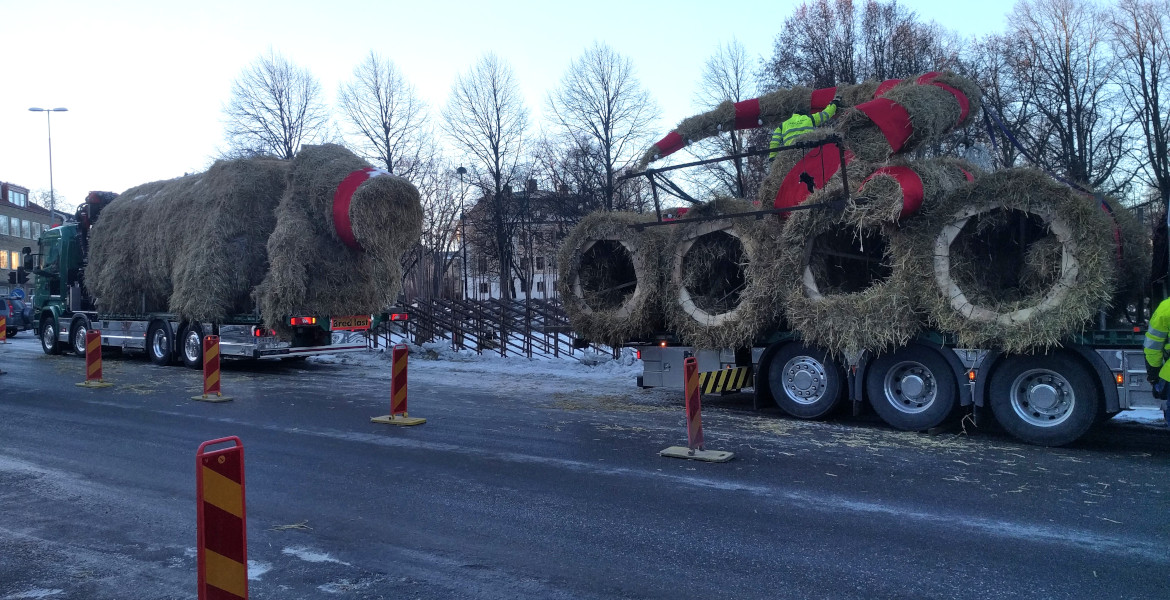
Transport of the Gävle Goat in 2020. Photo: Niklasew/CC BY-SA 4.0

A celebrity goat

In 1985, they returned to erecting the large straw goat, and the same year the Gävle Goat entered the Guinness Book of Records for the first time. It was then measured at 12.5 meters.

Since 1986, both the large and small goats have been erected every year, and it was also at this time – in the mid-1980s – that the term "Gävlebocken" (the Gävle Goat) began to be used.

In 1991, the goat was significantly commercialized. It was equipped with a sleigh loaded with packages and used to advertise various shops and goods. However, the sleigh was criticized for being an illegal construction, and after some debate it was removed.

During the 1990s, the goat was rebuilt on one occasion after burning down, this time under the name Hälsingebocken (the Hälsingland Goat). It was transported to Stockholm to draw attention to the closure of the Hälsinge Regiment and the high unemployment in Gävleborg County.

Sport to burn down the goat

It's unclear exactly when it became a kind of "illegal sport" to burn down the poor straw goat, but in almost all years there have been attempts to achieve the fateful tradition of setting it on fire. Already in the 1990s, camera surveillance was installed, and in the late 1980s its fate appeared on betting odds lists.

In 2014, the odds according to betting site Betway were 1.3 times the money that the goat would be burned and 3 times the money that it would survive Christmas.

Despite protection and flame retardants, there have been quite a few remarkable incidents over the years. In 2004, for example, the Gävle municipality's website was hacked already in November and the message "Burn bockjaevel" appeared on both the website and the webcam. It was then burned on December 21.

The following year, two men – one dressed as Santa Claus and the other as a gingerbread man – shot flaming arrows at the goat, burning it down.

In 2010, the goat was guarded by security guards, and fortunately so – there were plans to kidnap it with a helicopter and take it to Stockholm.

Symbol of Christmas

Several people have been both charged and convicted for the acts against the Gävle Goat over the years. In 2018, the Swedish Court of Appeal ruled that attacking the straw goat constitutes aggravated vandalism. Despite this, attempts to burn down Gävle's Christmas symbol continue.

On the first Sunday of Advent, Gävle residents gather in the city center for the inauguration of the now 59th goat, and the tradition itself has become a symbol of Christmas for many Swedes.

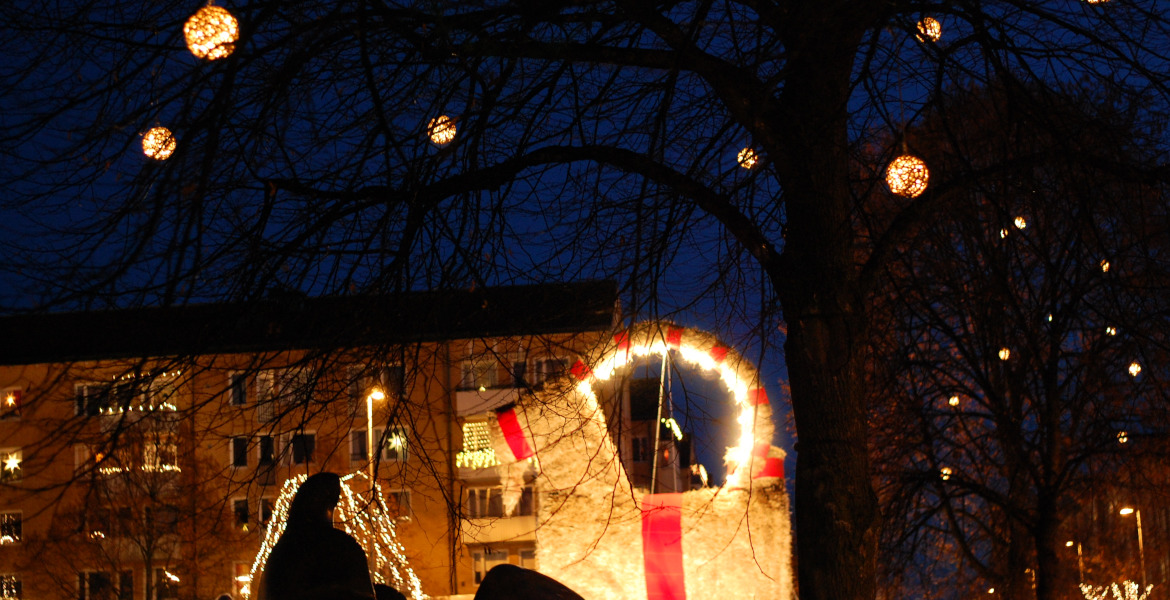
Nowadays, however, the goat no longer stands at Slottstorget but has been moved to Rådhuseplanaden just north of Rådhustorget (City Hall Square).

In 2024, the goat only burned down with the help of AI – a fake image that fooled both foreign bettors and Swedish Christmas lovers. However, there was no real fire, and the goat remained standing throughout Christmas.

During the week, the goat's parts were transported to its place by the square using trucks.

Today, November 30, the Gävle Goat is being inaugurated during a grand spectacle where the city's residents gather for a variety of Christmas activities both during the day and in the evening. The question is whether – or for how long – the goat will stand this year.

If possible, one should probably hurry to Gävle if you want to catch a glimpse of the majestic goat before it perhaps once again burns down to the ground.

China’s cultural gem Jiangsu visited Stockholm

Published November 24, 2025 – By Editorial staff
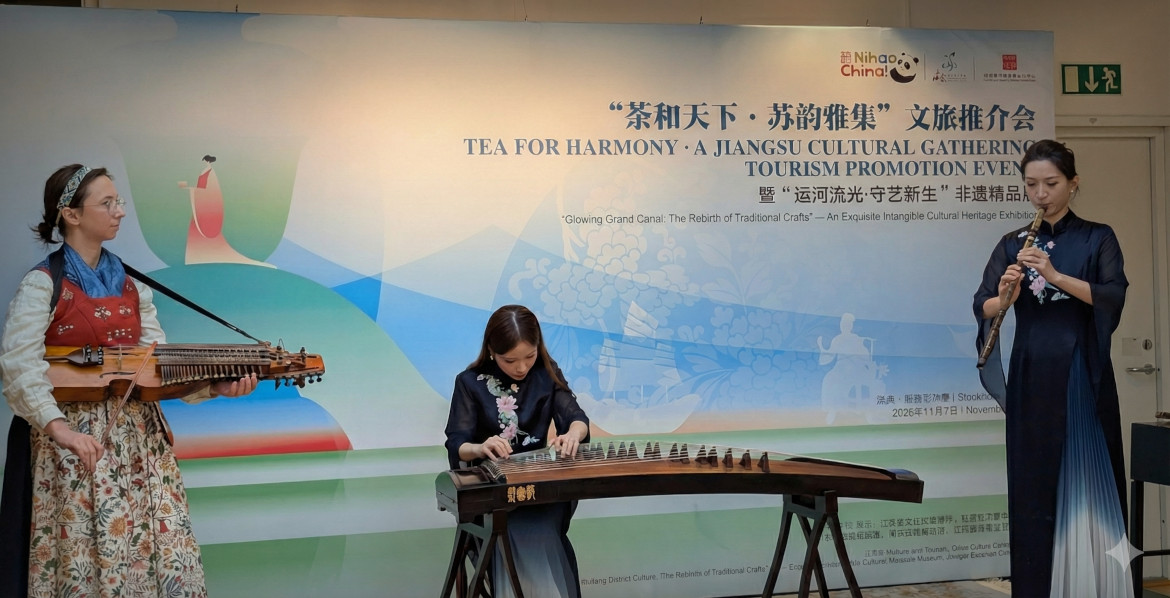
Chinese and Swedish artists united east and west in a poetic musical dialogue between the nyckelharpa, guzheng and bamboo flute.

A colorful cultural and tourism event showcasing the unique traditions, crafts, and modern charm of Jiangsu Province took place in Stockholm on November 7.

The Jiangsu Provincial Department of Culture and Tourism and the Chinese Cultural Center in Stockholm hosted an inspiring event where visitors experienced China's cultural heritage through music, tea, crafts, and interactive activities reflecting both history and the present day.

The highlight was a concert where Chinese and Swedish artists united East and West in a poetic musical dialogue between nyckelharpa (a traditional Swedish keyed fiddle), guzheng (Chinese zither), and bamboo flute, an interpretation of the spirit of "water," the symbol of Jiangsu's elegance and cultural depth.

The Cultural Center was filled with visitors who sampled tea, enjoyed exhibitions, and explored opportunities for future collaborations. Many were fascinated by Jiangsu's combination of tradition, innovation, and artistic finesse.

At the same time, the exhibition Canal Reflections & Craft Revival was displayed with three thematic rooms: The Taste of Tea, The Rhythm of Silk, and The Color of Porcelain. In the tea room, classical paintings such as Huishan Gathering created a poetic atmosphere, where the renowned green tea Biluochun and Yixing clay vessels offered a taste of Jiangnan's refined culture. Jiangsu Phoenix Publishing Group also presented the English edition of The Taste of Chinese Plants, which was shown to an international audience for the first time.

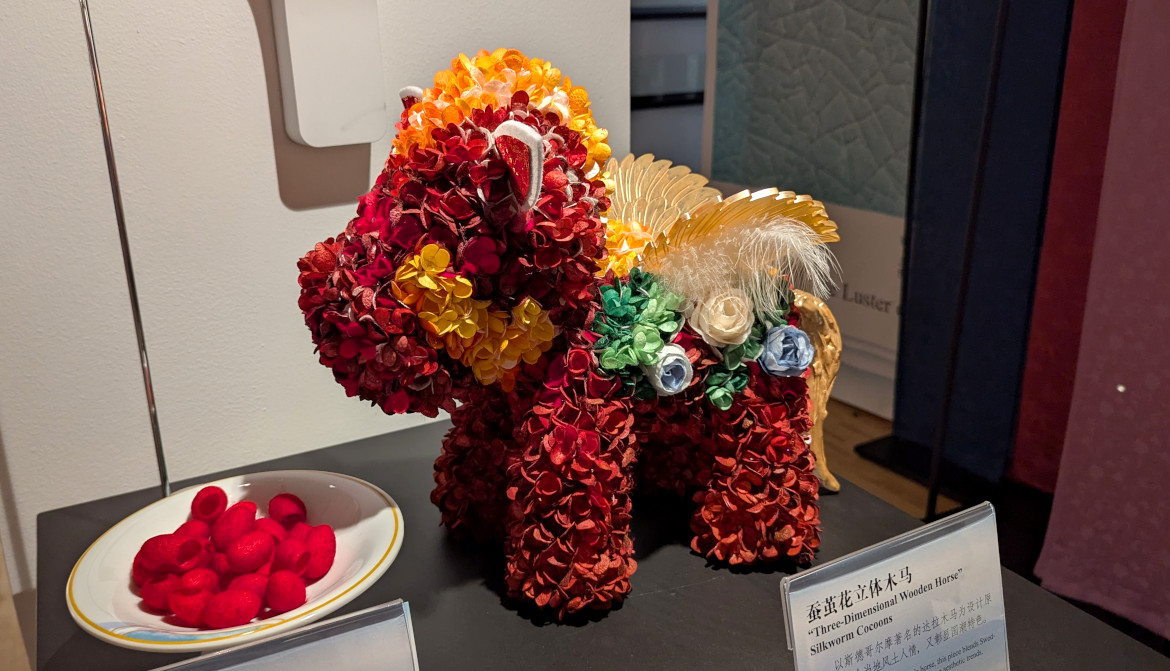
In the silk theme, a sculptural Dala horse created from silk cocoons stood as a symbol of the meeting between Chinese and Swedish craftsmanship. Photo: The Nordic Times

Suzhou Silk Museum and the brand Taihu Snow displayed joint creations where historical patterns met modern design. Additionally, Suzhou University's digital laboratory for traditional crafts demonstrated its new color digitalization system for the kesi embroidery technique, alongside a demonstration by young Suzhou embroidery artists.

A woman from Jiangsu Province displayed her craft of embroidered silk art. Photo: The Nordic Times

In the porcelain section, elegant Yixing celadon and ceramic art from Gaochun were displayed, a modern interpretation of the spirituality of water and the symbolism of color in Chinese aesthetics.

Stephen Brawer, chairman of the Belt & Road Institute in Sweden, gave a speech about Chinese culture and general development and how the country has succeeded in eradicating poverty for nearly 800 million people. Photo: The Nordic Times

Jiangsu is a province that unites tradition, innovation, and sustainable tourism, something that more and more Swedish travelers are discovering. The event is part of Jiangsu's international program for cultural and tourism promotion, with the goal of creating new bridges in tourism, education, and cultural exchange.

— We want to invite our Swedish friends to discover Jiangsu's beauty, not just as a destination, but as a cultural experience that touches all the senses, says Qian Ning from the Jiangsu Provincial Department of Culture and Tourism.

From November 10, 2025, a visa-free arrangement applies for Swedish citizens traveling to China for stays of up to 30 days, a new opportunity to experience Jiangsu's charm up close.

Guzheng – the ancient unique stringed instrument

The guzheng is a Chinese stringed instrument with a history spanning over 2,500 years. The earliest variants emerged during the Warring States period and evolved to become a popular instrument at courts, ceremonies and banquets during the Qin and Han dynasties. The instrument's design changed gradually; it gained more strings and improved resonance, which enabled greater expressiveness and musical variation.​

Particularly during the Tang dynasty, the guzheng's role flourished within both classical and folk music, and several technical innovations made the instrument even more versatile. During the 20th century, new materials were introduced in the strings, and standardized forms were developed to meet the demands of modern music. Today, the guzheng is one of China's most beloved and widely used traditional instruments.

Unique discovery found in Viking grave

Published November 14, 2025 – By Editorial staff

A skeleton from the Viking Age has been found in Norway with burial details that have never before been documented in pre-Christian graves in the Nordic region. The find has led archaeologists to work in secret, and now DNA analyses will provide answers to the mystery surrounding the woman from the 800s.

The discovery was made in Bjugn in Trøndelag, central Norway, after Roy Søreng was searching with a metal detector in a field in Val earlier this year. When he found a belt buckle, a typical ornament from the Viking Age, he contacted the authorities.

Archaeologists from NTNU Vitenskapsmuseet (the Norwegian University of Science and Technology's Museum of Natural History and Archaeology) and Trøndelag municipality then began work at the site where they were able to confirm that it was a grave.

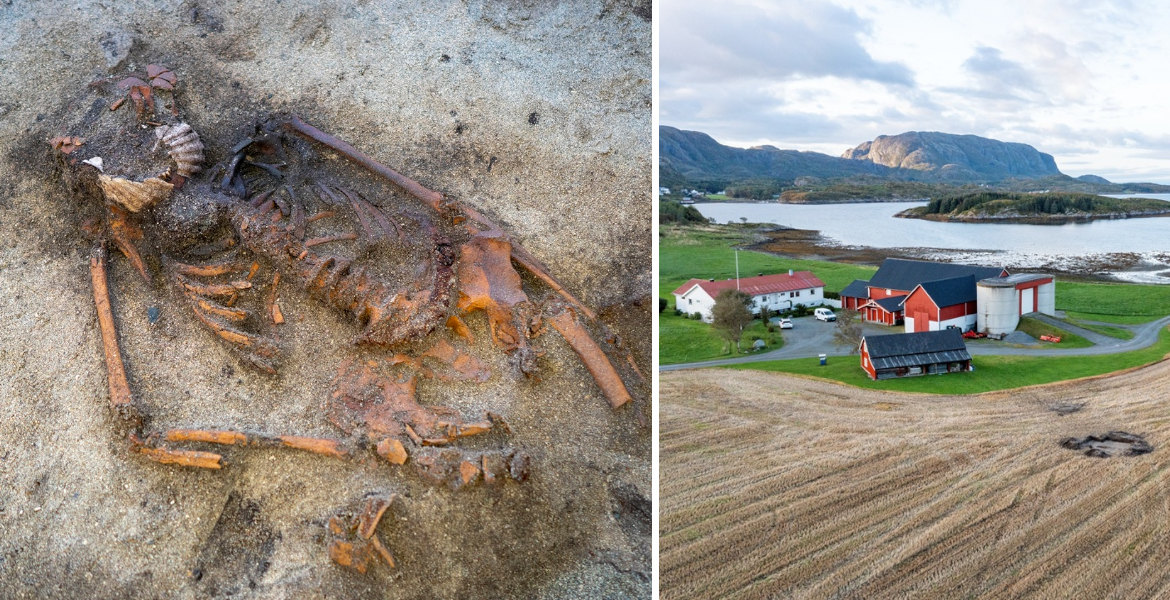
The Viking Age grave contains what we believe is a woman, buried with typical Viking Age dress and jewelry from the 800s. This indicates that she was a free and probably married woman, perhaps the mistress of the farm, said senior engineer Raymond Sauvage at the Department of Archaeology and Cultural History at Vitenskapsmuseet in a press release.

Remarkable find

The work has since continued in secret because the find was deemed so significant. Now the archaeologists reveal that they found jewelry consisting of two oval brooches that fastened the straps of the pinafore dress, as well as a small ring brooch that closed the neck opening of the undergarment. It was one of these brooches that Søreng originally discovered. The skeleton was also very well preserved.

But the most remarkable aspect is what was found at the dead woman's mouth.

The most remarkable thing is two scallop shells placed at the deceased's mouth. This is a practice not previously known from pre-Christian graves in Norway. We don't yet know what the symbolism means, said Sauvage.

The burial custom with shells did not become common until approximately 300-400 years later, and pre-Christian graves with shells have never before been found in Scandinavia, Sauvage explains.

We must try to find out what significance this had, he told Norwegian state broadcaster NRK.

Second find in a short time

The shells were positioned with the curved side outward and the straight edge upward, so that they partially covered the mouth. Along the grave, the researchers also found small bird bones, probably from wings.

During the Viking Age, burials were ritual stagings where jewelry, clothing and grave goods expressed status and identity. The deceased was displayed with dress, bedding and symbolic objects to create a strong memory and emphasize the family's social position.

Earlier this year, another grave was found in the same field, dated to the 700s. The next step is to DNA-analyze the find to learn more about the woman in the grave, including whether she may be related to the person in the other grave.

We will examine the skeleton, preserve the objects and take samples for dating and DNA analysis. The goal is to learn more about the person and, if possible, kinship to the earlier find from the same location, said Sauvage.

Here’s when Swedes can visit China visa-free

Published November 8, 2025 – By Editorial staff
One of the palaces in the "Forbidden City" in Beijing, China's capital, which is one of the country's most popular tourist destinations.

The Asian giant is making it easier for Swedes who want to explore Chinese culture and business life. Starting November 10, Swedes can now travel to China without a visa for stays of up to 30 days.

Sweden was the last Nordic country where citizens had to apply for a visa to visit China, while visa-free travel was introduced in neighboring countries in November last year. Visa applications involve both costs and require more planning before trips, with significant limitations on flexibility.

Travel operators have pointed out that this has limited both tourism and business travel. Now it becomes easier to book a trip spontaneously, whether the purpose is to discover the country's culture or develop business contacts, and the regulatory easing is a sign that relations between Sweden and China have improved.

China, which in area is almost as large as all of Europe, carries a 5,000-year-old civilization and culture that is well-preserved and has a great diversity of local cultures, traditions, food, and ethnic minorities with their unique expressions.

In the north, the capital Beijing attracts visitors with iconic sights such as the Great Wall of China, the Forbidden City, and Tiananmen Square. To the west lies the historic city of Xi'an with the famous Terracotta Army and traces from the ancient Silk Road.

Southern China offers dramatic karst mountains around Guilin, green rice fields, and opportunities for bamboo raft trips on calm rivers. Shanghai combines metropolitan energy with modern architecture and historic quarters where old meets new.

The country also contains lesser-known gems such as Taoism's sacred mountains, Buddhist temples, and traditional villages where old craft traditions are still preserved.

Good to know

The visa exemption applies to business, tourist, family and friendship visits, as well as exchange trips and transit. Travelers must have a regular Swedish passport that is valid for at least six months after entry. The stay may not exceed 30 days, and the exemption applies through December 31, 2026.

Upon entry, travelers may provide fingerprints and facial photos. Since the country experienced a severe period of terrorism, stricter controls were introduced both at entry into the country and on certain travel routes within the country.

Surveillance cameras are extensively deployed in public places and in traffic.

At the same time, the country is considered one of the world's safest to visit, with very few violent crimes. China now has the world's most modern infrastructure with low living costs and high accessibility to everyday services, social activities, and a rich cultural life.