X refuses to impose censorship – now the EU wants to punish the platform

Published July 15, 2024 – By Editorial staff
European Commission President Ursula von der Leyen and Elon Musk, owner of X.

The European Commission claims that X (formerly Twitter) is "in breach of the Digital Services Act (DSA)" - and therefore the platform is at risk of millions of euros in fines and other retaliatory measures.

However, owner Elon Musk and other commentators argue that the powers that be are out to punish X because, unlike many other social media platforms, it has refused to secretly impose extensive censorship on the platform.

The Commission's "preliminary view" is that X is in breach of the DSA because, among other things, the blue checkmarks indicating who has a verified account "does not correspond to industry practice and deceives users".

"Since anyone can subscribe to obtain such a “verified” status, it negatively affects users' ability to make free and informed decisions about the authenticity of the accounts and the content they interact with", it claims.

The Brussels powers-that-be also claim that X "does not comply with the required transparency on advertising, as it does not provide a searchable and reliable advertisement repository", and are also appalled that X "fails to provide access to its public data to researchers".

"In particular, X prohibits eligible researchers from independently accessing its public data, such as by scraping, as stated in its terms of service. In addition, X's process to grant eligible researchers access to its application programming interface (API) appears to dissuade researchers from carrying out their research projects or leave them with no other choice than to pay disproportionally high fees", it continues.


A retaliatory measure?

"If the Commission's preliminary views are ultimately confirmed, the Commission would adopt a non-compliance decision finding that X is in breach of Articles 25, 39 and 40(12) of the Digital Services Directive. Such a decision could impose fines of up to 6% of the service provider's total annual worldwide turnover and require the service provider to take measures to remedy the infringement", it threatens, promising to "force" X to comply in such a scenario.

X owner Elon Musk, however, believes that this is an act of pure vengeance by the powers that be in Brussels, and says that the European Commission recently "offered X an illegal secret deal" to avoid heavy fines - in exchange for introducing extensive censorship.

"The other platforms took the deal. X did not", he continues.

"Don't be fooled"

Investigative journalist and author Michael Shellenberger agrees, saying that "the totalitarianism we warned about is now happening".

"The European Union is at this moment forcing big tech companies to secretly engage in mass censorship. Google and Facebook are, apparently, going along with it. Only Elon Musk’s X, among the major platforms, is resisting", he writes.

"the EU is preparing to punish X with massive fines — up to 6% of total global revenue. I can't imagine a more egregious form of foreign interference in our domestic affairs than foreign governments demanding mass secret censorship for ideological and political purposes", he continues.

Shellenberger says that the "most terrifying" thing is how government intelligence and security services appear to be directly involved in demanding censorship - while those same governments warn daily of Russian censorship.

"Don’t be fooled by what is happening. Governments and former intelligence officials in Europe, Australia, Israel, Brazil, and Ukraine and other nations are not only demanding censorship but also often spreading their own disinformation", he explains.

"We have to fight back"

He argues that the EU's claims that there is more false information on X than on other, more heavily censored platforms are simply false. Rather, X has greater and broader freedom of expression, where discussion and dialogue are used "to give context to controversial content" - rather than bans and blocks.

"What the EU wants is for its committees of experts, not Community Notes, to secretly decide what we can read and say online. This is unethical and unconstitutional. Another key part of the EU’s disinformation is that “researchers” should have access to X’s internal data, which Musk cut off when he bought Twitter. But those people who want the data aren’t researchers. They’re censorship activists, many of whom have deep relationships with governments in general and intelligence agencies in particular", he continues.

Schellenberger warns that if the EU succeeds in censoring X and the other major Internet platforms, there will be no freedom of expression - only government-controlled speech.

"Many people rightly worry about the implications of a single man, Elon Musk, being all that stands between us and foreign governments’ totalitarian censorship plans. I worry about that, too. Our speech is inalienable. It is not something governments give to us".

"We need to fight back. While we should be grateful to Musk for standing up to the totalitarians in Europe, Brazil, and Australia, we must build a citizen’s movement to fight back", the journalist urges.

TikTok can also be punished

It should also be noted that X is not the only platform that EU leaders want to punish and "bring into line". China's TikTok has long been accused of being a platform for spreading "disinformation" and "hate" and is being investigated to see if it too is in violation of the DSA - if so, it too risks being fined 6% of its global revenue.

In the past, governments in the US and EU have mainly relied on the major platforms to censor controversial and politically incorrect content - such as criticism of mass immigration, feminism, or the LGBTQ movement - on their own initiative, which has happened on a large scale on YouTube and Facebook, among others.

Recently, however, there seems to have been a partial shift in focus, with platforms being more explicitly forced to implement various forms of censorship - and threatened with penalties and fines if they refuse.

TNT is truly independent!

We don’t have a billionaire owner, and our unique reader-funded model keeps us free from political or corporate influence. This means we can fearlessly report the facts and shine a light on the misdeeds of those in power.

Consider a donation to keep our independent journalism running…

Hong Kong in mourning after deadly fire claims at least 128 lives

Published November 29, 2025 – By Editorial staff
The fire started during the renovation of seven high-rise buildings in the Tai Po district, near the border with mainland China.

Hong Kong is mourning the victims of its worst fire in nearly 80 years. At least 128 people have died in the blaze that ravaged a high-rise complex under renovation, but the death toll is expected to rise significantly. Eleven people have been arrested on suspicion of corruption and use of flammable materials, among other charges.

The rescue operation at the Wang Fuk Court complex in the Tai Po district, near the border with mainland China, concluded on Friday. However, police warn that more bodies may be found as they continue to search through the burned-out buildings in the coming weeks.

The number of missing persons has been revised down from 200 to 150 after some relatives managed to reunite with loved ones they had initially reported as missing.

Spread rapidly through the buildings

The fire started on Wednesday afternoon and spread rapidly through seven of the complex's eight 32-story buildings. The structures were clad in bamboo scaffolding with green mesh netting and foam insulation in preparation for renovation work.

Hong Kong's anti-corruption agency ICAC reports that three additional people have been arrested. The three, aged 52 to 68, were responsible for overseeing the contractor carrying out the renovation work at the complex. A total of 14 people have now been arrested in the investigation.

Authorities have confirmed that the fire alarms at Wang Fuk Court, which is home to over 4,600 people, were not functioning properly at the time of the fire.

Mainland China ordered a nationwide inspection of fire risks in high-rise buildings on Saturday, particularly residential buildings undergoing renovation.

Foreign workers among the victims

Among the victims are domestic helpers from Indonesia and the Philippines. Hong Kong has approximately 368,000 such workers, mainly women from low-income Asian countries who live with their employers, often in cramped conditions.

Indonesia has confirmed that seven of its citizens died in the fire. The Philippines reports that one citizen is critically injured and another is confirmed missing, while 28 are believed to reside in the area but cannot be located.

Worst fire since 1948

The fire is Hong Kong's deadliest since 1948, when 176 people died in a warehouse fire. The disaster has drawn comparisons to the Grenfell Tower fire in London in 2017, where 72 people died.

Residents of Wang Fuk Court were told by authorities last year that they faced "relatively low fire risks" after complaining about the fire hazard posed by the renovation, according to the city's Labour Department.

Residents raised their concerns in September 2024, including about the potential fire hazard of the protective green mesh netting that contractors used to cover the bamboo scaffolding.

Hong Kong's Buildings Department halted all work on Saturday at 28 projects managed by Prestige Construction, the company identified by the government as responsible for maintenance at Wang Fuk Court for over a year.

"Our deepest thoughts are with all those who have lost loved ones and with those now living in shock and uncertainty," said Britain's King Charles in a statement about the "terrible tragedy."

A spokesperson from China's national security office in Hong Kong said on Saturday that the office supports the city government in severely punishing anyone who uses the disaster to disrupt Hong Kong.

US Excludes South Africa from G20

Donald Trump's USA

Published November 27, 2025 – By Editorial staff
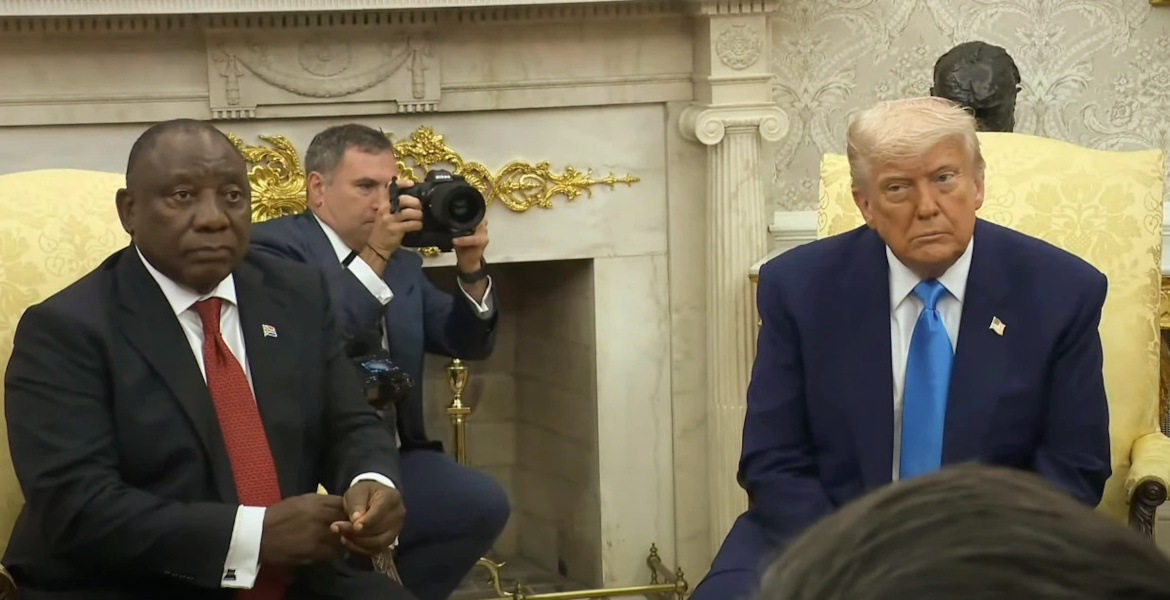
South Africa will not receive an invitation to the 2026 G20 meeting if Donald Trump gets his way.

US President Donald Trump announces that South Africa will not be invited to next year's G20 summit in Miami. The decision follows serious allegations of an ongoing genocide against South Africa's white minority.

Trump claims that systematic attacks and murders of white farmers in South Africa have occurred under the government's silence.

In a post on Truth Social, he writes: "They are killing white people, and randomly allowing their farms to be taken from them".

He directly links the allegations to his decision: "At my direction, South Africa will NOT be receiving an invitation to the 2026 G20, which will be hosted in the Great City of Miami, Florida next year".

Trump adds that the US will also stop all payments and subsidies to South Africa. He also criticizes American media, which he accuses of remaining silent about what he calls genocide.

Among others, the American president singles out The New York Times as particularly complicit through their silence.

Ramaphosa rejects the allegations

South African President Cyril Ramaphosa and other representatives strongly reject the picture of an ongoing genocide.

— That is not the government's policy, Ramaphosa said in May this year, when the issue of land seizures and violence against white farmers came up during a meeting with Trump at the White House.

Cyril Ramaphosa and Donald Trump during the spring meeting at the White House. Photo: screenshot/White House

Both politicians and courts in South Africa have consistently denied that there is a targeted genocide against white people in the country.

According to the president's spokesman Vincent Magwenya, Ramaphosa noted Trump's "regrettable statement" and rejected claims that South Africa does not deserve its place in the G20.

As a founding member of the G20, South Africa values consensus, collaboration and partnership, Magwenya explained.

The G20 group consists of 19 countries, the EU and the African Union. This year's summit in South Africa was conducted without the presence of high-ranking American representatives, after Trump refused to back down from his allegations.

Next year's G20 meeting will be held at Trump National Doral, the family company's golf resort outside Miami.

Russia producing weapons in volumes adversaries “couldn’t have dreamed of”

The war in Ukraine

Published November 26, 2025 – By Editorial staff
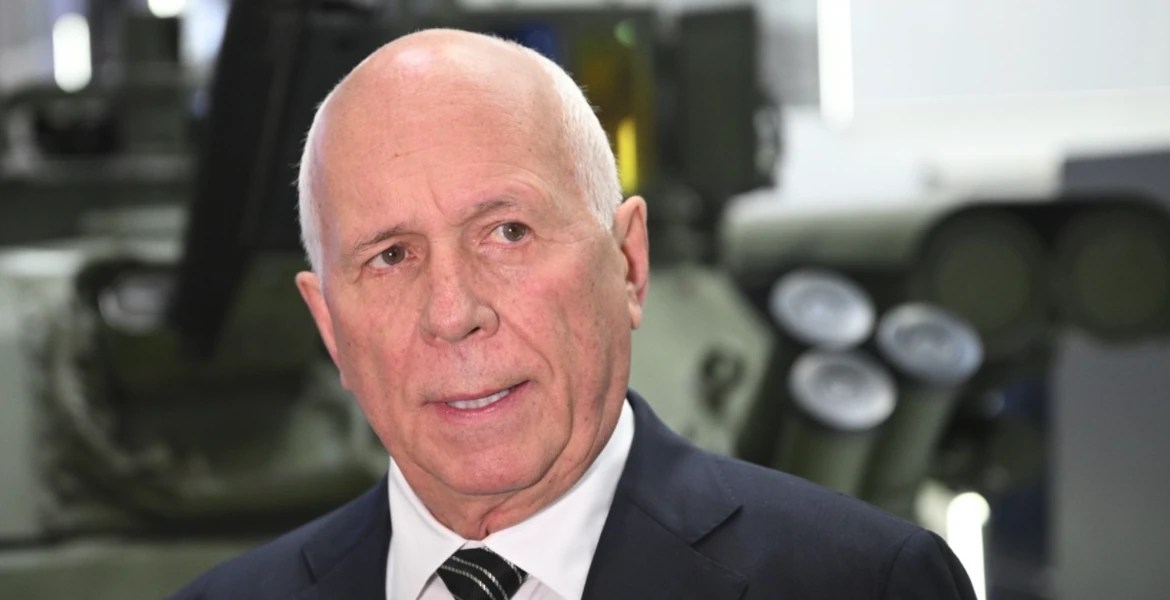
Sergei Chemezov is the head of Rostec, the Russian state-owned defense conglomerate.

Russia's defense industry is now manufacturing more artillery shells and aerial bombs than any other country in the world, according to Sergey Chemezov, head of the state-owned defense conglomerate Rostec. Production has increased dramatically since the conflict in Ukraine escalated in 2022.

In an interview with the news agency TASS, published on Tuesday, Chemezov outlines a significant escalation in weapons manufacturing, writes RT.

We are supplying aircraft, tanks, infantry vehicles, howitzers, electronic warfare systems, drones and much more in enormous quantities. No country in the world today produces as many shells and aerial bombs, he says.

Chemezov states that he cannot provide exact figures but notes that the production volumes are such that the country's adversaries "could not have dreamed of".

Production multiplied many times over

Russian officials have repeatedly highlighted the increased defense production over the past three years. In May 2024, President Vladimir Putin stated that ammunition manufacturing had increased fourteenfold since the military operation began, while drone production had quadrupled and the production of armored vehicles increased 3.5 times.

Russia has consistently condemned Western arms deliveries to Ukraine, arguing that they only prolong the conflict without affecting its ultimate outcome.

Kremlin open to negotiations

Kremlin spokesperson Dmitry Peskov reiterated on Tuesday that Russia wants to achieve its goals "through political and diplomatic means" and that the country remains "completely open to a negotiation process". At the same time, Moscow accuses Kiev of wanting to continue the fighting, backed by its Western allies.

Russia has also accused the EU and Britain of obstructing ongoing peace efforts.

American academics propose nuclear weapons for US allies

Published November 24, 2025 – By Editorial staff
Professors Mark Raymond (left) and Moritz Graefrath write in a joint opinion piece that US allies should be allowed to acquire their own nuclear arsenals.

The American journal Foreign Affairs has published a debate article by two professors at the University of Oklahoma that challenges prevailing security policy principles. The professors suggest that the United States' closest allies should consider acquiring nuclear weapons themselves.

The article, authored by professors Moritz S. Graefrath and Mark A. Raymond, has received extensive international attention and sparked controversy, though no Western country has yet officially endorsed the proposal.

In the widely discussed text, the duo argues that countries such as Canada, Germany, and Japan have both the technical capacity and security interests to develop nuclear weapons themselves – thereby reducing their dependence on US military protection.

The article states that "America’s allies should go nuclear. Selective proliferation will strengthen the global order, not end it".

The text highlights that these countries already participate in advanced military cooperation with the US and have access to the resources required for developing nuclear weapons.

The authors continue: "What the three allies would need – and what the United States can and should provide – is public support and diplomatic cover for their transition to becoming nuclear-armed states, as well as technical and doctrinal guidance to ensure robust command and control safeguards".

The debate surrounding the article has quickly gained momentum, and so far none of the countries mentioned in the text have officially endorsed the proposal, instead maintaining strong support for international disarmament and the Nuclear Non-Proliferation Treaty (NPT).

Critical reactions

Germany, for example, based on official statements, policy decisions and debate contributions, stands firm in its policy against nuclear proliferation and emphasizes that the country has no plans to change this principle.

Government representatives have expressed that Germany's position continues to support international disarmament agreements and that they reject all proposals to develop their own nuclear weapons.

Meanwhile, American and European experts have criticized the authors' reasoning as risky and have warned that such a development could trigger a new global arms race.

The background to the Foreign Affairs article is the increased geopolitically tense situation, where US commitments regarding the so-called nuclear umbrella are being questioned in several places in Europe and Asia.

Several European leaders have recently requested discussions about independent deterrence and nuclear weapons cooperation within NATO.

The US and other nuclear powers have so far rejected such discussions, continuing to insist on diplomacy and disarmament as the fundamental strategy.